Happy Fishing Guide: Targets, Costs and Risk
Evaluate arcade fishing games by understanding target selection, cost per shot and session limits.
Registration guidekg222 describes a general category of skill-based arcade fishing games in which aiming and timing matter, with different fish levels and rewards mentioned. However, there is no evidence that the specific title Happy Fishing is available at kg222. This page therefore explains common mechanics and risks without claiming title availability.

- Smaller targets may be easier to track
- Match your aim to target movement
- Check shot cost before potential reward
A general fishing-game illustration for understanding target size, speed and movement; it is not a verified screenshot of the kg222 interface.
These games commonly use a cannon or similar control to fire at moving targets. Each shot may consume credits, while any return depends on the game's own table and rules. Large or rare targets may display higher returns, but the number of shots required to capture them is uncertain; a higher value does not mean a profit.
Target Types in Fishing Games
🐠 Small, Fast Targets
Small targets often move quickly and may appear more frequently. It can help to aim slightly ahead of their path, keep the firing rate controlled and count the total cost spent on one target. Do not assume a fixed point value or capture probability.
🐟 Medium Targets
Medium targets may offer a balance between size and movement speed, although behaviour varies by game. Before firing repeatedly, check how long the target remains on screen, the unit cost of a shot and the displayed potential return.
🦈 Large Targets
Large targets may look easier to aim at but can require more shots. Money already spent is not a reason to keep firing; stop when the target moves away or your preset limit is reached.
🐉 Rare or Special Targets
Special targets often attract attention with distinct animation or a higher displayed value. That value is not a guaranteed reward. First read the maximum shot cost, the target's time window and any special conditions.

- Record shots used on each target
- Include missed shots in total cost
- Do not exceed the session limit
A general illustration of shot costs and target selection; it is not a reward table for a particular game.
Understanding Weapons, Shots and Power-ups
Base Cannon
The base cannon is commonly the primary control for choosing shot strength or credit value. Selecting a higher level may also increase the cost per shot, so check the displayed value before changing it.
Area-effect Shot
Some fishing games include weapons that can touch several targets with one shot. This does not automatically provide better value: check the activation cost, duration and whether multiple targets actually return the same value.
Single-use Effect
Features such as bombs or screen-wide effects may exist in some games, but no particular feature is confirmed here for Happy Fishing. Before using one, read whether it is purchased, earned or triggered randomly.
Time-limited Weapon
Costs can accumulate quickly during time-limited modes such as lasers, flames or rapid fire. Watch the remaining time, value per shot and whether auto-fire is enabled.
Names such as free shots, multipliers, special fish or jackpots can mean different things in different games. Do not assume they exist in Happy Fishing or at kg222. Check the game's rules for how a feature activates, which shots qualify, its duration and any return limit.
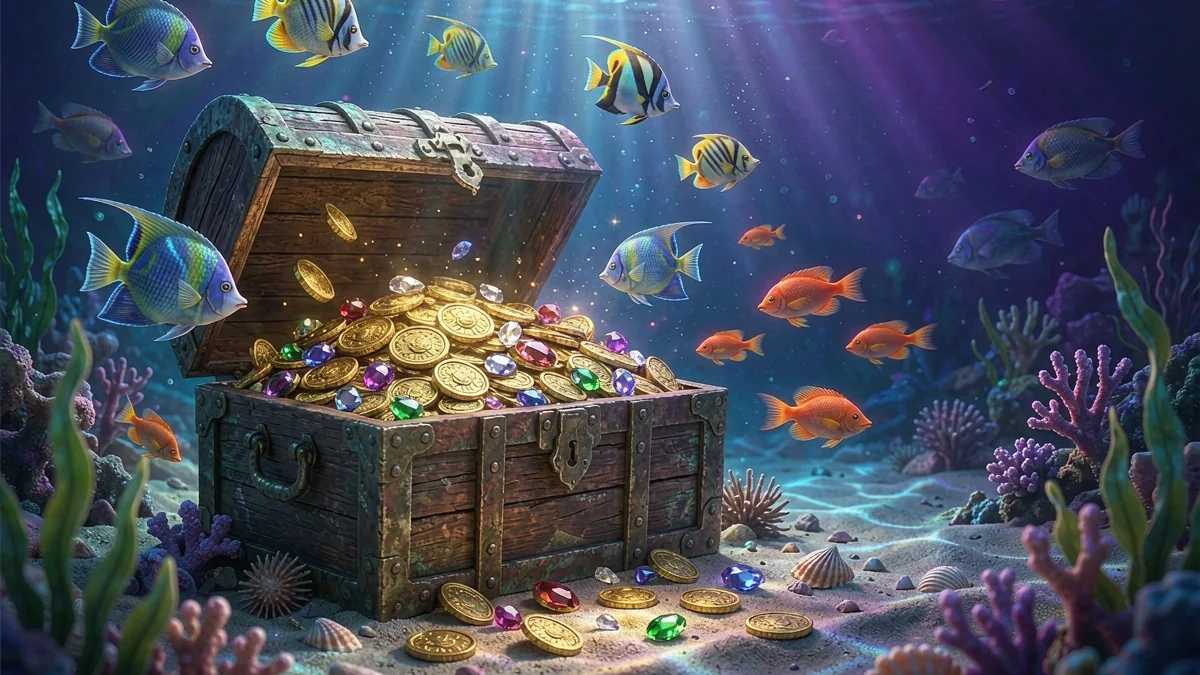
- Check the activation condition
- Verify duration and cost
- Stop firing when the effect ends
A general concept illustration for checking power-ups; it does not confirm any specific Happy Fishing or kg222 feature.
Cost Control and Play Strategy
Practical Checklist
The lowest available value can be used initially to understand the controls, target movement and shot accounting. This is not a winning strategy; it is a way to limit the cost of misunderstandings.
Even when a large or rare target shows a high return, the cost of capturing it may be unknown. Record how many shots have already been used and switch targets or stop when the limit is reached.
After changing weapons, check the displayed credit value before the first shot. When using auto-fire or rapid fire, also monitor how quickly the total cost rises.
A feature activation should not by itself be a reason to use larger shots or spend more. Find out how long it lasts, which targets it covers and whether it has a separate cost before deciding.
Set a time limit and maximum spend before the session begins. Rapid firing, frustration or attempts to recover earlier spending should not change those limits.
Record the opening balance, total credits purchased, shot costs, returns and closing balance. To understand the outcome, review the net change for the whole session rather than only captured targets or the largest single return.
Do Not Assume an Unverified Payout Rate
kg222 mentions a general fishing-game category, but there is no confirmation that the specific title “Happy Fishing” is available. Check the actual game’s rules, shot costs and outcome information before playing.
Registration guideArcade fishing games usually place several moving targets in the same scene. Each shot may have a cost, and the number of shots needed to catch a fish may be uncertain. Multiplayer, tournaments and leaderboards are not universal; where offered, check their schedules, eligibility rules and reward terms separately.
- Set time and spending limits first
- Log shots, cost and returns
- End the session when a limit is reached
A general illustration of session planning and result logging; it is not evidence of a leaderboard, tournament or guaranteed win.
Features to Check in a Fishing Game
Visible Targets
Check whether fish movement, size and travel paths are clearly visible.
Solo or Shared Play
Find out whether other players’ shots can affect your targets or results.
Special Features
If lock-on, area shots or multipliers appear, read their costs and activation rules.
Device Controls
Check how tapping, target selection and shot-value controls work on mobile and desktop.
Sound and visual effects may help identify targets, but they do not guarantee an outcome or reward. Watch balance and transaction changes so fast animation does not obscure the cost of each shot.
Treat seasonal fish, new weapons, limited-time events or jackpots as available only when they appear in the actual game rules. Check start and end times, eligibility, shot costs and reward conditions before entering an event.
Common mobile controls may include tapping a target, changing cannon direction and selecting a shot value. Test the controls at the lowest available cost and confirm that each tap registers once. Repeated taps on a weak connection may cause unintended extra shots.
No specific fishing game’s RNG, payout rate, fairness certificate or third-party audit can be confirmed here. Check the game information panel for how outcomes are determined, whether an auditor is named and whether any published certificate can be verified.
kg222 describes fishing games as skill-based arcade experiences where aiming and timing matter, with different fish levels mentioned. However, no specific title, reward amount or bonus for this game is confirmed. Set a spending limit before playing and do not continue in an attempt to recover losses.
💰 Costs and Possible Outcomes
A larger fish does not necessarily mean a better return: if it takes several shots to catch, the total cost may exceed the possible reward. Record the value per shot, total spend and result separately.
🎯 Core Controls
The usual steps are selecting a target, setting the shot value and firing. Do not assume that results depend only on aiming skill; each game may apply its own rules and probabilities. This is for adults only.
The colourful presentation of fishing games can make rapid spending less noticeable. Set time and money limits before a session, keep a record of shots and stop when a limit is reached. Do not spend beyond an entertainment budget or treat any strategy as a route to guaranteed profit.
